God’s Grace at Work: Meeting Him Where Strength Fades
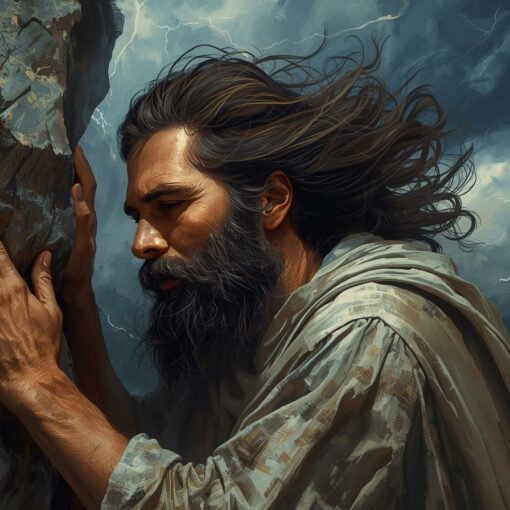
Elijah’s story is not one of collapse, but of God’s grace working within him to restore, replenish, and reorient him in the midst of his crisis. One of the most striking features of 1 Kings 19 is the way Scripture presents Elijah’s crisis without embellishment. The text simply reveals a prophet who has reached a point of internal depletion. Elijah’s despair does not reflect the loss of faith, but the limits of a faith that had not yet grown to meet the new demands pressing his heart. His crisis reveals that yesterday’s faith, while real, is not sufficient for today’s struggles. This reality becomes the sacred ground on which God begins His work of replenishment.
In Elijah’s story, God does not distance Himself from the crisis. Instead, He moves toward His servant with deeply intentional grace in the crisis. The entire chapter displays God engaging Elijah with such personal care that His actions resemble both the sanctifying grace later revealed to the Church and the sustaining grace shown to Israel throughout the Old Testament. Elijah’s circumstances had become distorted in his own mind; nevertheless, the Lord was holding, guiding, and attending to him at every step.
The Crisis as Sacred Space
Elijah’s collapse beneath the juniper tree exposes hidden asymmetries between his expectations and God’s plan. His despair reflects a weariness shaped by unrealistic conclusions and a desire for ministry outcomes God had not ordained. Elijah’s yearning to succeed—perhaps even to surpass the fathers before him—opened the door for distorted expectations. When those expectations were unmet, depletion followed.
This crisis is not a failure of Elijah’s calling, but a revelation of what has yet to mature within him.
The crisis becomes sacred because God uses it to distinguish the areas of Elijah’s spiritual life that require deeper development. His disappointment, discouragement, and emotional exhaustion are not dismissed by God; they are addressed by grace. In this sacred space of exhaustion, God protects Elijah from catastrophic failure and positions him for consummate growth. Even though Elijah fled, God’s grace did not leave him in the crisis.
Grace Begins Its Work
God’s first interactions with Elijah in the wilderness are quiet and measured. Scripture highlights the angel’s touch and the provision of bread and water. Though Elijah had used sleep as an escape from his despair, God uses nourishment and gentle contact as the beginning of restoration. Elijah “looked” — nabat, meaning to regard with attention — and saw what God had placed before him. This is significant, as it stresses that Elijah had not yet regained spiritual clarity; still, he recognized that God had provided for him.
Even so, Elijah failed to see the spiritual reality behind the physical provision. How his basic needs were being met by a divine means. Though he appreciated the bread and water, he did not yet perceive that God was addressing the deeper depletion of his heart. The same God who sustained him at the brook Cherith and through the widow of Zarephath was now sustaining him again, but Elijah’s unmet expectations had colored his perception of past blessings, obscuring God’s faithful actions in the present.
This is a central point: God is the benefactor of grace; we are the beneficiaries. Grace works in us long before we can understand or interpret its movements. God’s grace is available to strengthen His children in the midst of the crisis.
Grace Enables Elijah’s Steps
With the nourishment given by God, Elijah traveled forty days and forty nights to Horeb. This forty-day-and-night timeframe consistently signifies divine testing, reproving, and proving. Elijah, who felt finished with his priestly work, now undergoes a period of spiritual convalescence in which God reorients him toward Himself, developing within him a new disposition.
Elijah’s journey echoed Israel’s wilderness pilgrimage—yet in reverse—and his steps were sustained by God in order to prepare him for the meeting ahead. The point is not to speculate about Elijah’s internal thoughts, but to recognize that this period was divinely orchestrated for spiritual realignment.
Where Elijah’s path had been shaped by selfish ambition that resulted in depletion, God’s grace in the crisis was now leading him back to the Mountain of God, where self-sufficiency would be rendered inoperative by spiritual brokenness and renewed dependence on God’s redemptive plan.
In Crisis, Grace Counsels and Confronts
At Horeb, the word of the Lord comes to Elijah with a simple but piercing question: “What are you doing here, Elijah?” This question anchors us to critical insight: Elijah’s crisis was not about his external dangers but about his unmet expectations and spiritual misalignment. His answer reveals that he has thoroughly rehearsed his narrative, yet it avoids the heart of the issue — his depletion.
God does not correct him immediately. Instead, His grace in the midst of crisis continues its patient work.
Grace Connects with Him in the Whisper
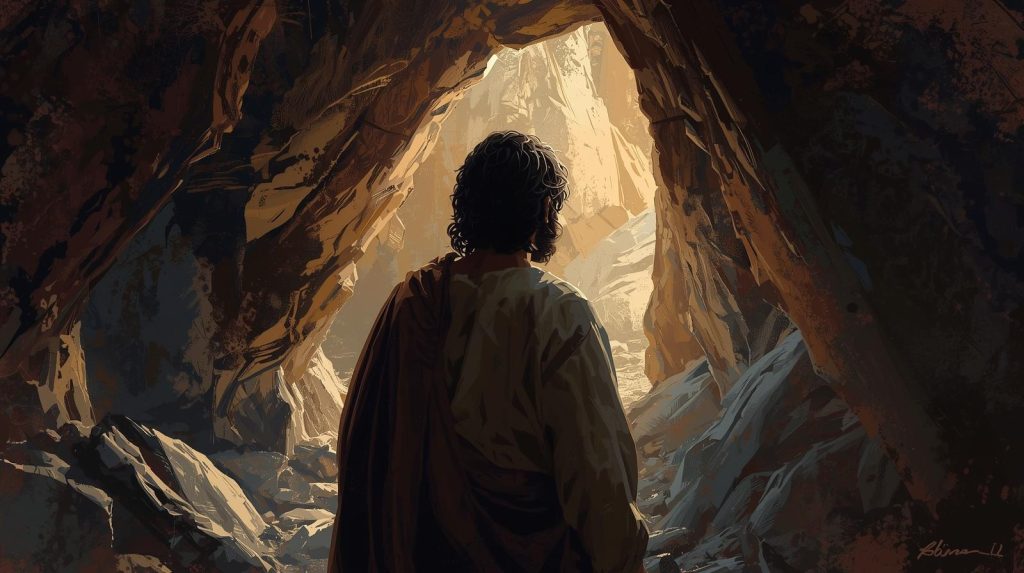
God’s graphic illustration was oriented toward emphasizing the gentle blowing—the whisper—as central. God was not in the wind, earthquake, or fire. Elijah had seen extraordinary power before, but now God draws near in intimate stillness. The whisper represents God meeting Elijah not through spectacle, but through identity and intimate belonging. It is the place where spiritual renewal begins.
Elijah did not need a demonstration of power but a restoration of intimate connection—relationship.
The whisper is where grace reaches into the center of Elijah’s depletion and begins replenishment from the inside out.
Grace Challenges Elijah Toward Maturity
When God repeats the question, Elijah repeats his answer word for word. This repetition indicates God inviting Elijah into deeper reflection. Something was missing. Elijah’s narrative lacked recognition of God’s presence and God’s actions.
Grace challenges him by bringing him face-to-face with what he had omitted. It is not a rebuke but a necessary confrontation so God may realign Elijah’s understanding and prepare him for what comes next.
Grace Still Whispers in the Crisis
Elijah’s story is not one of collapse, but of God’s grace working within him to restore, replenish, and reorient him in the midst of his crisis. Grace held him, helped him, enabled him, counseled him, connected with him, and challenged him. Each movement of grace addressed a dimension of his depletion. Each movement prepared him for renewed faithfulness.
When strength fades, grace begins its deepest work.
And when the fire is gone and the wind has settled,
the whisper remains.
In that whisper, God restores the soul.
In that whisper, He realigns the heart.
In that whisper, He leads His servant forward.
Explore more posts from our resilience series, Elijah: Fire, Fear, and Faithfulness—Finding Christ Relevant to the Fragile Moments of Life.
- Resilience Is the Christ-given Capacity to Live Abundantly
- Walking by Faith: Elijah Teaches Resilience Comes from Trust
- Courage and Resilience in the Face of Opposition
- Resilience God’s Way: Not Effort but Anointing
- How to Live a Life of Righteous Acts
- Finding Strength in the Midst of Spiritual Warfare
- Learn Why Faithfulness Is the True Measure of Strength
- Where Is Your Focus? On Faith or Fear?
- Resilience Found in Dependence: Elijah’s Faith and Frailty
- When the Fire Fades Resilience Is Found in Surrender
POST A COMMENT about your insights on your journey toward spiritual maturity! We would love to connect with you!
Want more encouragement to see how Christ is relevant to every area of life? Join our email community!