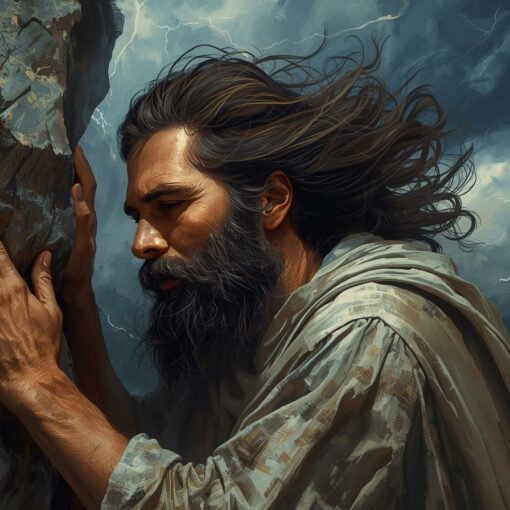

God sent Elijah on a journey from a hidden brook into the heart of enemy territory, revealing how faith matures through step-by-step obedience and discovering that resilience comes from trust.
Sent into Enemy Territory
In 1 Kings 17, God tells Elijah to go to Zarephath — a city in Sidon, the homeland of Jezebel, King Ahab’s fierce pagan wife. This is the last place Elijah might expect to find safety or provision.
Yet, Elijah obeys without hesitation, even though the widow who will care for him is on the brink of starvation herself. This move reminds us that resilience isn’t found in comfort zones but in trusting God’s presence wherever He calls us.
Sometimes, God leads us right into the places we fear most — not to abandon us, but to show us His sustaining power in ways we never imagined. Resilience emerges from deeply rooted trust in God, even in intimidating places.
God’s Word Sustains in Scarcity
Elijah asks the widow to make him a small cake first, even though she barely has enough for herself and her son. This request is more than a test; it’s an invitation to trust God’s promises.
Miraculously, the jar of flour and jug of oil do not run dry throughout the famine. This provision is a powerful reminder that God’s Word is the channel for His grace and sustenance, showing that resilience comes from placing trust in Him.
When resources shrink, the real question is: Am I trusting the One who is truly enough?
Faith That Grows Through Obedience and Intercession
Elijah’s path shows us a pattern of growing faith:
- Confronting Ahab boldly with God’s Word.
- Trusting God’s provision by the brook Cherith.
- Moving into hostile territory in Zarephath.
- Caring for a starving widow and her son.
- Praying earnestly and seeing God raise the widow’s son from death.
Each step demands more trust and deeper reliance on God.
At first, Elijah obeys because God commands. Later, Elijah prays to God — he intercedes, carrying the widow’s pain as his own.
This progression from obedience to intimate partnership with God marks true spiritual resilience. It means we don’t just do God’s work; we live in God’s heart for His people. Trust can be seen as the foundation from which resilience ultimately springs.
What Elijah’s Journey Means for Us
Resilience isn’t about self-sufficiency. It’s about walking faithfully with God, step by step, in whatever circumstances He places us.
It means:
- Trusting God’s presence more than our perceived safety.
- Believing His promises even when resources are scarce.
- Growing from simple obedience into a mature faith that intercedes and ministers.
In this way, Elijah’s life becomes a mirror for ours, inviting us to deepen our trust in Christ — the source of abundant life and true resilience that comes from trust.
Are you facing your own “Zarephath” moment — a place that feels hostile or impossible?
Remember Elijah’s journey and the Christ-given capacity to live abundantly regardless of circumstances. God is faithful to lead you, sustain you, and grow you — step by step.
Explore more posts from our resilience series, Elijah: Fire, Fear, and Faithfulness—Finding Christ Relevant to the Fragile Moments of Life.
- Resilience Is the Christ-given Capacity to Live Abundantly
- Courage and Resilience in the Face of Opposition
- Resilience God’s Way: Not Effort but Anointing
- How to Live a Life of Righteous Acts
- Finding Strength in the Midst of Spiritual Warfare
- Learn Why Faithfulness Is the True Measure of Strength
- Where Is Your Focus? On Faith or Fear?
- Resilience Found in Dependence: Elijah’s Faith and Frailty
- When the Fire Fades Resilience Is Found in Surrender
- Strength for the Weary: Grace in the Midst of Crisis
POST A COMMENT about your insights on your journey toward spiritual maturity! We would love to connect with you!
Want more encouragement to see how Christ is relevant to every area of life? Join our email community!